

Everyday foot traffic, energetic pets, and seasonal humidity shifts test the durability of your hardwood finish. Surface wear happens over time, but premature peeling, cloudy patches, and early scratching often trace back to rushed mechanical prep and standard builder-grade polyurethanes.
At Luminous Flooring, our Bona Certified Contractor credentials mean our team follows factory-tested sanding sequences, uses advanced dust containment systems, and applies commercial-grade waterborne finish systems built to handle decades of active household living.
Hardwood floors in historic Webster Groves brick colonials face different daily demands than wide-plank layouts in modern Chesterfield homes. The right professional knows how to assess your specific wood species, check subfloor stability, and build a protective finish system that preserves rich grain definition while withstanding the daily rhythm of Greater St. Louis living.
Advanced Sanding Protocols Build the Foundation for Finish Adhesion
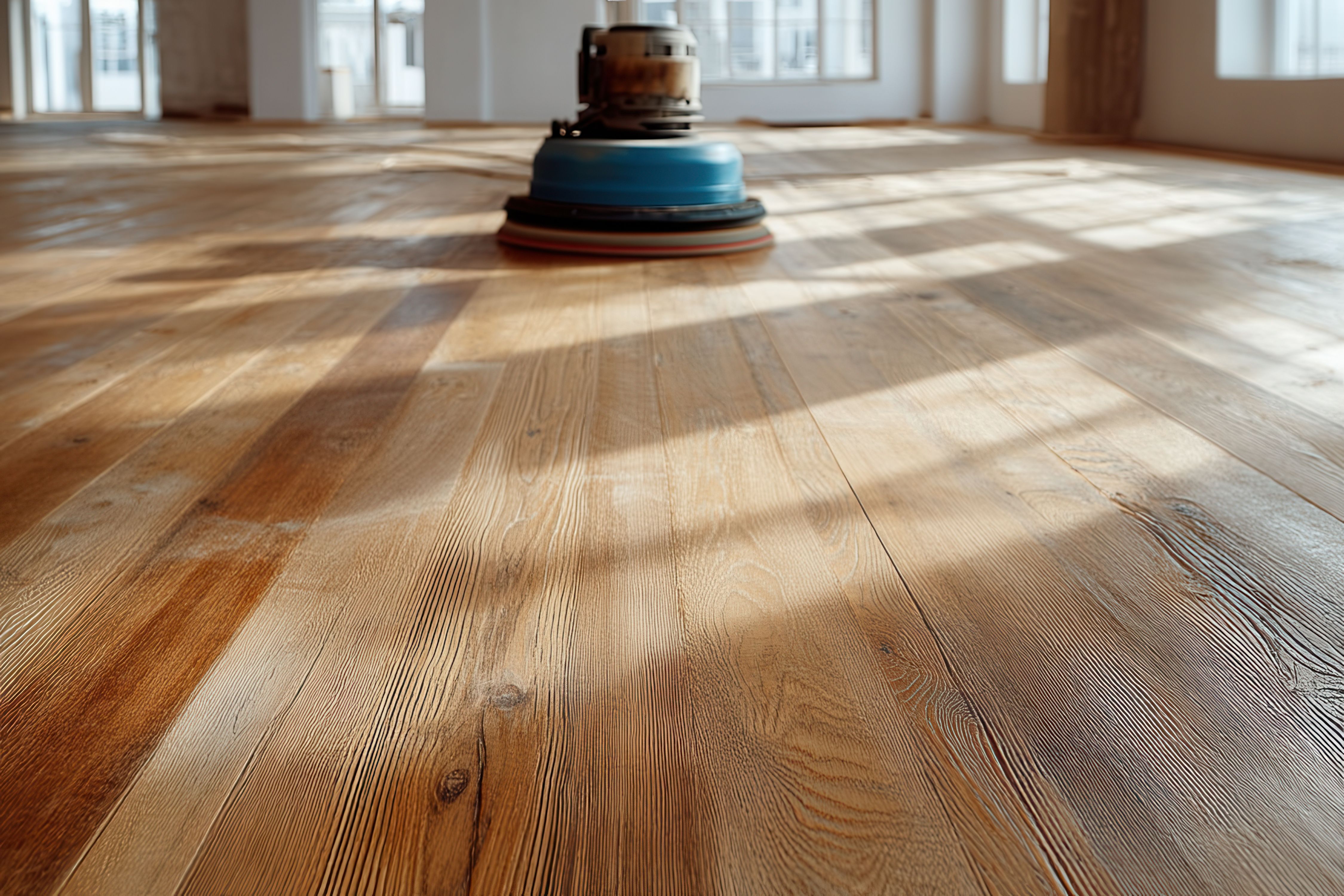
Finish coats form a physical bond with raw wood fibers. Incomplete grit progression or uneven drum pressure leaves chatter marks and polished spots that reject stains and topcoats. Certified craftsmen use specialized planetary sanding machinery connected to multi-stage HEPA vacuums that capture airborne wood dust right at the cutting head. That containment keeps your indoor air clean and keeps stray dust particles out of wet protective layers.
Oak responds differently across cuts and ages. Narrow-strip red oak boards in a 1920s Kirkwood bungalow have tight, dense annual rings that absorb pigments differently than fresh white oak laid across an open-concept kitchen. Certified training teaches our craftsmen how to read these subtle grain variations and prep the bare wood with precise abrasive sequences.
A certified specialist protects your investment through critical mechanical checks:
Historic preservation priorities: Century-old boards have limited wear layers above the tongue-and-groove joint and call for delicate machine calibration to preserve original wood thickness.
Dust containment standards: Your family deals with dust sensitivities, or your home features ornate millwork and historic built-ins that collect airborne debris.
Complex grain conditions: Uneven sun exposure across south-facing rooms creates dried-out, patchy wood areas that call for specialized conditioning before staining.
Certified Chemical Mastery With Commercial Waterborne Topcoats
Traditional oil-based polyurethanes amber over time, casting an unnatural yellow-orange shade across pale oaks and muted stain tones. Modern waterborne finishes dry clear, curing into a hard protective shield without off-gassing harsh chemical fumes through your living spaces. But waterborne products dry quickly and demand rigorous technical execution during application.
Bona certification means our crews train extensively on product chemistry, mixing ratios, and exact dry film thicknesses. Applying dual-component commercial finishes like Bona Traffic HD calls for precise catalyst blending, correct room temperature control, and timed re-coat windows. Applied with certified precision, these topcoats resist heavy pet claws, sliding furniture, and kitchen spills without softening.
Certified waterborne finish systems suit specific household layouts:
Abundant natural lighting: Expansive picture windows in open West County floor plans create harsh glare on high-gloss sheens, making low-sheen matte formulas a better visual fit.
Fast cure times: Your busy family schedule calls for rapid access back into main living areas, since waterborne formulas allow light foot traffic within hours.
Neutral stain palettes: Pale greiges and natural whites call for non-ambering clear coats to stay true to their original color over years of sun exposure.
Compatible Stain Systems Prevent Finish Delamination
Wood takes color differently depending on its age, harvest cut, and surrounding environmental moisture. Paper color swatches and digital photos rarely match the actual stain tone on your floor. As a Bona Certified Contractor, our specialists apply custom test patches directly onto your freshly sanded hardwood so you can evaluate the pigments under your home's natural daylight and evening lighting.
Certified knowledge also prevents chemical failure between your color layer and your clear topcoat. Applying waterborne finishes over traditional hardware-store stains often triggers adhesion failure or bubbling if the base coat has not cured completely. Bona Certified craftsmen work with tested, fast-drying stain systems designed specifically to bond with waterborne urethanes.
Original woodwork in older Clayton homes often calls for rich walnut or deep chestnut tones that anchor tall baseboards and historic trim. Contemporary residences in Wildwood lean toward light, neutral tones that keep wide living areas bright and open. Matching compatible color systems to proper topcoats ensures the rich shade you select stays locked into the grain without separating.
Work With a Bona Certified Contractor for Hardwood That Endures
Long-lasting hardwood finishes rely on methodical mechanical preparation, proper wood conditioning, and commercial-grade protective topcoats. Luminous Flooring has served homeowners throughout the St. Louis area since 2005 as a proud, family-owned specialist. Backed by one of the largest teams of National Wood Flooring Association (NWFA) Certified professionals in the region and our verified Bona Certified Craftsman credentials, we bring technical precision and honest guidance to every project.
Visit our Herculaneum showroom to see real wood samples, compare finish sheens in person, and talk through custom stain options for your space. When you are ready to update your floors with lasting durability and authentic style, contact us to schedule your in-home consultation.


