

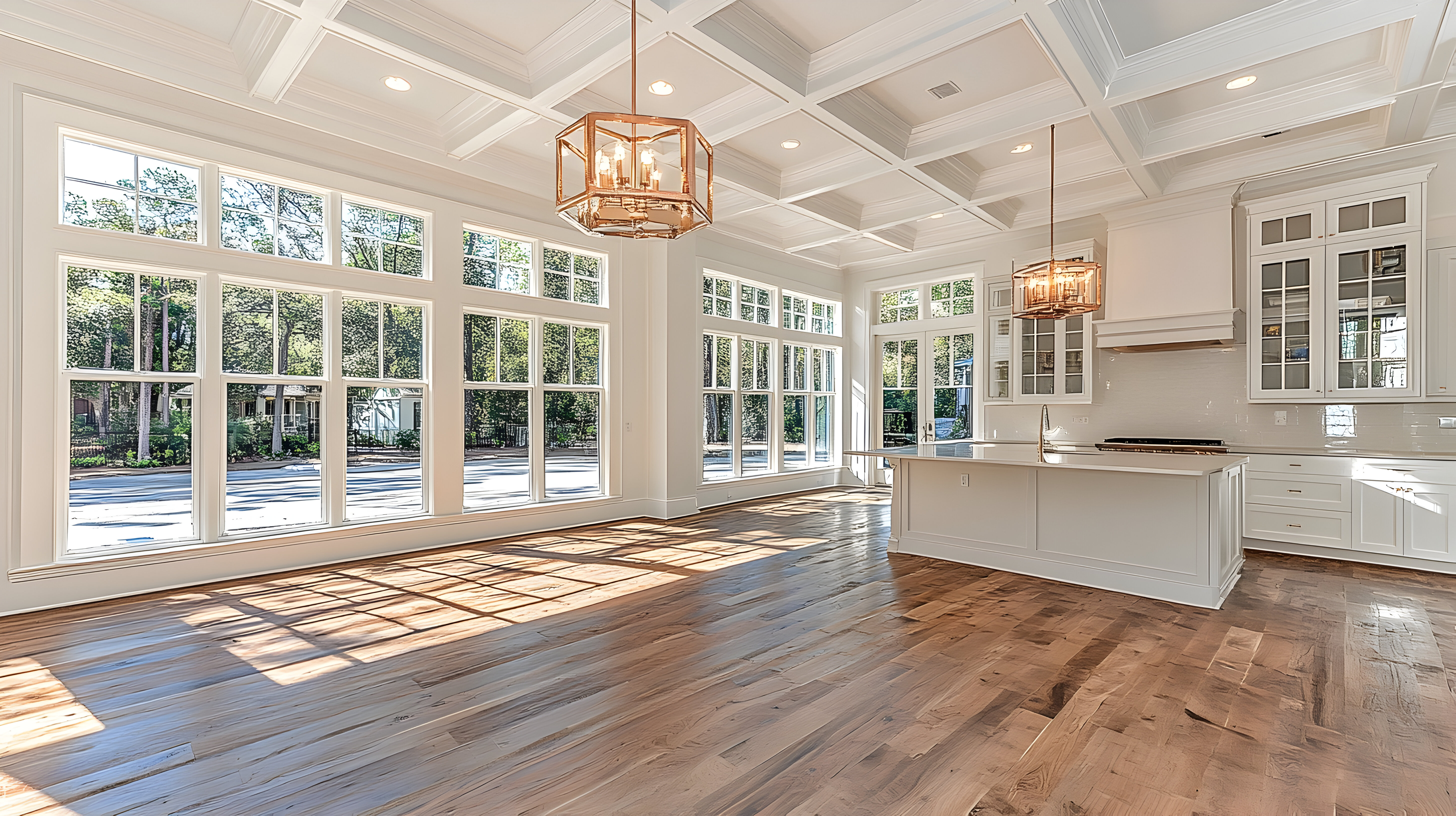
Solid hardwood floors need timely preventative care before daily foot traffic wears through the protective clear finish. A professional screen and coat—also known as a buff and coat—adds a fresh layer of protective finish over your existing topcoat without removing raw wood.
Applying this maintenance coat every three to five years protects the underlying timber, preserves your custom stain color, and saves you thousands of dollars by delaying the need for a full, dust-contained sanding.
Protecting Wood Against St. Louis Climate Swings
St. Louis summers bring intense outdoor humidity, while winter heating dries out indoor air. These seasonal shifts cause natural wood movement across solid red oak, white oak, and maple floors. When boards expand and contract throughout the year, the protective polyurethane coating flexes along board edges.
Over time, fine grit carried in from humid summer weather or tracked across entryway thresholds micro-scratches the top finish coat. Once grit wears through the top seal, moisture from spills or damp shoes penetrates raw wood, causing dark water stains and surface graying along board seams. A screen and coat applies a new protective coat directly over light surface scratches, restoring a solid barrier against humidity and daily wear.
How the Screening Process Restores Your Topcoat
Screening works differently than a full sanding restoration. A full sanding uses heavy belt equipment with coarse abrasive paper to grind down to raw wood, removing deep gouges and changing stain colors. Screening uses a rotary floor machine fitted with a fine mesh abrasive screen to lightly abrade only the existing finish coat.
The process follows precise technical steps to ensure proper adhesion:
Deep surface cleaning: A specialized floor cleaner removes oil residues, dust, and household cleaners that prevent new finish from bonding properly.
Light mechanical abrasion: The fine mesh screen scuffs the top poly layer, creating microscopic grooves that allow the new clear finish to adhere tightly without disturbing the stain layer beneath.
Vacuuming and tacking: High-efficiency vacuuming and microfiber tacking remove every trace of fine dust before application.
Applying protective finish: A fresh layer of commercial-grade waterborne or oil-modified polyurethane seals the entire floor surface smoothly.
Screening takes a single day to complete, allowing you to walk on your floors in socks within hours.
Identifying When Your Floor Needs Maintenance
Catching wear early determines whether a floor qualifies for a simple screen and coat or needs a full sand down to raw wood. Performing a simple water droplet test helps you evaluate the condition of your clear topcoat.
Pour a few drops of water onto high-traffic areas like kitchen prep spaces or main hallways:
The water beads up cleanly: Your protective topcoat remains intact, and the floor only needs basic cleaning.
The water slowly soaks in after several minutes: The finish has thinned significantly. Your floor is the ideal candidate for an immediate screen and coat to rebuild protective thickness.
The water soaks in immediately and turns the wood dark: The finish has worn away completely, leaving raw timber exposed. The wood now needs a full sanding and refinishing to restore the surface.
Historic homes in Kirkwood and Webster Groves often feature original early-to-mid-20th-century two-inch strip oak planks over diagonal pine subfloors. Because these older floors have survived decades of refinishing, the remaining wood layer above the tongue-and-groove joint is thinner than on modern lumber. Regular screening preserves this limited wood depth, allowing vintage floors to last for generations without structural thinning.
Preventing Wax and Polish Contamination
Screening relies on a clean chemical bond between the old finish and the new topcoat. Synthetic floor polishes, acrylic restorative sprays, and oil soaps leave a soft chemical film on the surface. When a new coat of polyurethane goes over wax or acrylic buildup, the fresh finish peels away in sheets as it cures.
Homes in older neighborhoods with original wax-finished oak need a complete wax strip and evaluation before screening. If your floors contain heavy wax layers or acrylic polish buildup, our technicians test finish adhesion in a discreet closet or corner before starting work.
Long-Term Maintenance Planning with Luminous Flooring
A fresh protective coat every few years extends the life of your hardwood floors while keeping your home bright and easy to clean. Timely maintenance prevents finish breakdown, shields raw wood from seasonal humidity swings, and avoids the disruption of full sanding.
At Luminous Flooring, we help you protect your investment with professional dust-contained maintenance and refinishing services. Operating from our showroom in Herculaneum, MO, our team features one of the largest groups of National Wood Flooring Association (NWFA) Certified professionals in the region, and our family-owned business holds Bona Certified status. We bring nearly 20 years of local experience, clear itemized project estimates, and low-VOC finish options to every job. Whether you need a simple maintenance coat for your main level or a complete historic floor restoration, we deliver lasting craftsmanship built for your home.
Contact us today or visit our showroom to speak with a certified specialist and schedule your in-home floor evaluation.


