

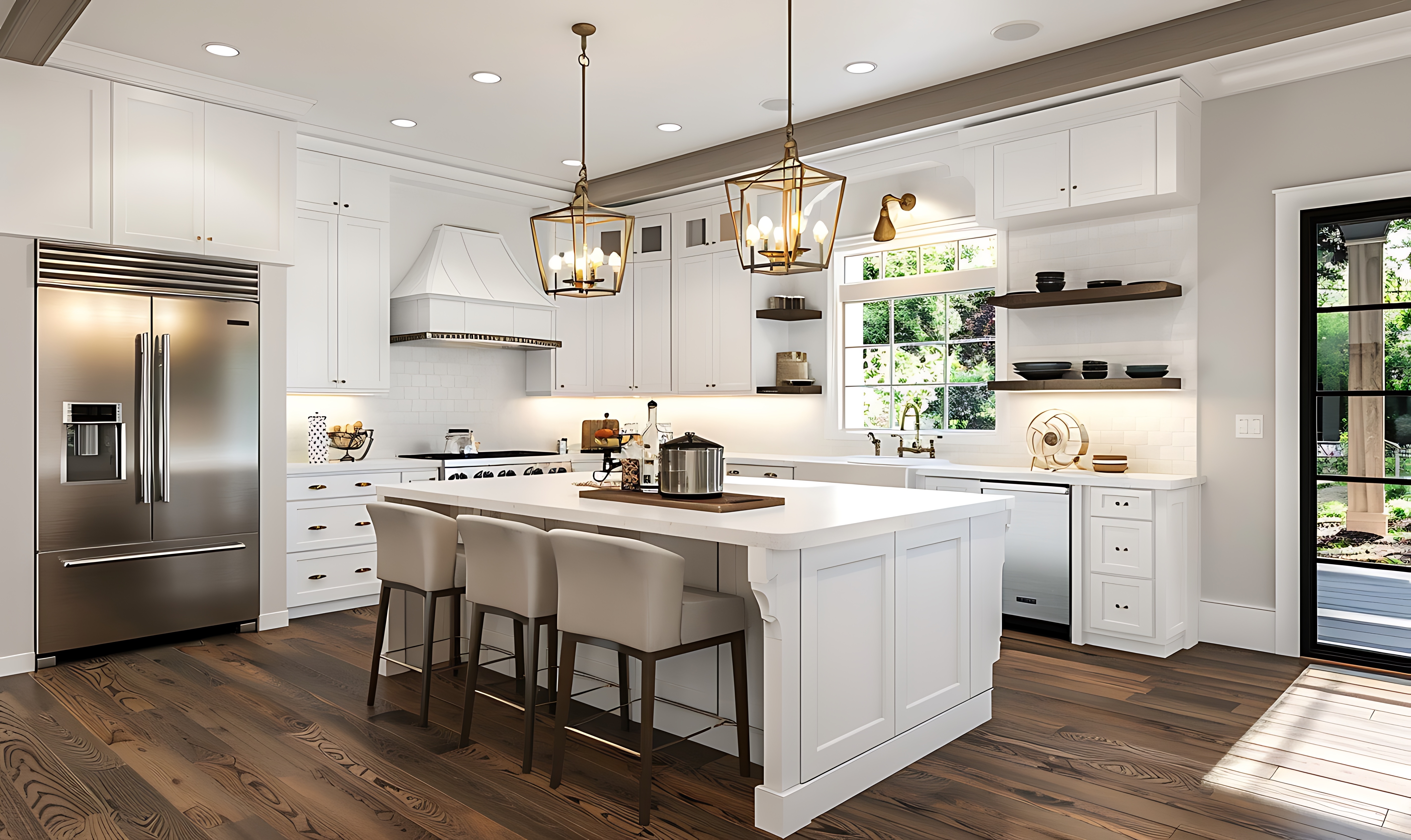
Knocking down an interior wall between an enclosed kitchen and formal dining room breathes fresh air into a traditional St. Louis colonial. Sunlight from front living room windows finally reaches the back of the house, creating a bright, connected layout built for modern family gatherings. But once the studs come down, you are left looking at an awkward, unfinished trench across your original hardwood flooring where the wall baseplate and old cast-iron heating grate used to rest.
Dropping a flat wooden transition strip or raised reducer over that gap creates an annoying trip hazard that chops up your sightlines. You do not have to settle for an obvious patch line. Professional board weaving laces fresh wood straight into the original floorboards, creating a unified room layout that looks original to the house.
Precision Tooth-In Weaving Eliminates Unsightly Room Dividers
Traditional brick colonials across Kirkwood, Webster Groves, and Ladue feature classic center-hall architecture with distinct, segmented living spaces. Builders in the 1930s and 1940s laid narrow two-and-one-quarter-inch tongue-and-groove oak boards room by room, ending each floor neatly against dividing walls. When you open those spaces up, a simple butt-joint patch leaves a straight, jarring seam across the walking path.
Skilled craftsmen use a technique called toothing-in to erase that boundary entirely. Our technicians carefully stagger cut alternating boards back into the existing floor, cutting clean mortises into original planks at irregular intervals. We then slide individual matching replacement boards into those staggered notches, interlocking the new wood with the old. That staggered joint pattern mimics the natural rhythm of the surrounding room, ensuring your eye never catches a harsh repair line under natural light.
Tooth-in repairs solve distinct layout challenges during a home remodel:
Old floor furnace registers: Splicing boards across removed hallway grate openings replaces wide metal grilles with solid, quiet walking surfaces.
Removed kitchen dividing walls: Interlocking planks across former partition lines bridges the transition between dining areas and updated cooking islands.
Widened doorways: Staggered board weaves stretch original living room oak smoothly into new sunroom or family room additions.
Wood Species and Grain Matching Protect Historic Architectural Flow
St. Louis homes hold authentic character in their original woodwork, but aged oak carries distinct grain traits that modern lumber yards rarely stock off the shelf. Century-old red and white oak floors feature slow-growth grain patterns with dense annual rings. Sourcing modern fast-growth boards with wide, loose grain creates a visible mismatch, even if both batches come from the same oak species.
Our team inspects your original flooring to verify wood species, board thickness, and grain cut before sourcing repair materials. Sourcing reclaimed or custom-milled vintage-profile oak ensures your new planks match the exact wear layer, face width, and tight growth rings of your original floorboards. That attention to grain density ensures the new wood accepts stain at the exact same rate as surrounding boards, preventing dark or cloudy blotches across the repaired area.
Match these specific details to maintain continuous visual elegance:
Exact face widths: Historic narrow-strip floors measure two-and-one-quarter or one-and-one-half inches, calling for precision-milled boards rather than standard modern dimensions.
Consistent grain cuts: Pairing plain-sawn boards with existing cathedral grain patterns maintains visual harmony across high-traffic walkways.
Aged density selection: Sourcing tight-grained wood ensures replacement planks wear evenly alongside vintage boards under busy household foot traffic.
Sanding and Stain Blending Unite Old and New Oak Underfoot
Once replacement boards sit flush with surrounding timber, dust-contained sanding systems level the surface without spreading fine grit across your renovated kitchen cabinets. Planetary sanding equipment flattens high board edges, cuts away aged varnish, and prepares both old and new wood fibers to take color uniformly.
Testing custom stain patches directly on the spliced floor lets you evaluate shades under your home's unique daylight. A rich, warm walnut stain anchors traditional trim in historic dining spaces, while natural neutral tones highlight authentic wood grain in transitional living areas. Applying low-luster commercial waterborne topcoats eliminates shiny glare, sealing the repaired floor against pet claws, sliding dining chairs, and daily kitchen spills.
Choose Luminous Flooring for Historic Hardwood Restoration
Creating a smooth, continuous hardwood layout after an open-concept remodel calls for skilled board lacing, precise wood matching, and high finishing standards. Luminous Flooring has served homeowners throughout the St. Louis area since 2005 as a dedicated, family-owned hardwood specialist. Backed by one of the largest teams of National Wood Flooring Association (NWFA) Certified professionals in the region and our verified Bona Certified Craftsman credentials, our team brings thoughtful guidance and skilled craftsmanship to every historic home.
Visit our Herculaneum showroom to see real wood samples, compare finish sheens in person, and review custom stain options for your remodel. When you are ready to remove a wall and unite your living spaces with continuous wood beauty, contact us to schedule your in-home consultation.


